

My Store
Custom CsI:Tl Scintillator Crystals for Gamma Detection
Custom CsI:Tl Scintillator Crystals for Gamma Detection
Couldn't load pickup availability
CsI(Tl) (Thallium-doped Cesium Iodide) is one of the most widely used inorganic scintillator crystals for X-ray and gamma-ray detection, valued for its very high light yield, excellent stopping power, and emission spectrum well matched to silicon photodetectors. By introducing trace amounts of thallium activator ions into the CsI lattice, the scintillation efficiency is significantly enhanced, resulting in bright green emission centered around 550 nm.
Compared with undoped CsI, CsI(Tl) provides substantially higher light output, enabling improved signal-to-noise ratio and reliable energy discrimination in low-to-moderate count-rate applications. Its emission wavelength closely matches the peak sensitivity of photodiodes, avalanche photodiodes (APDs), and silicon photomultipliers (SiPMs), allowing compact, rugged detector designs without the need for UV-sensitive photomultiplier tubes.
With a high effective atomic number (Z) and density (~4.51 g/cm³), CsI(Tl) offers strong absorption efficiency for X-rays and gamma rays, making it suitable for medical imaging systems, security scanners, radiation monitoring instruments, and laboratory spectroscopy setups. While its decay time (~1 µs) is slower than fast scintillators such as pure CsI or LaBr₃, it remains well suited for applications where light yield and detection efficiency are prioritized over timing resolution.
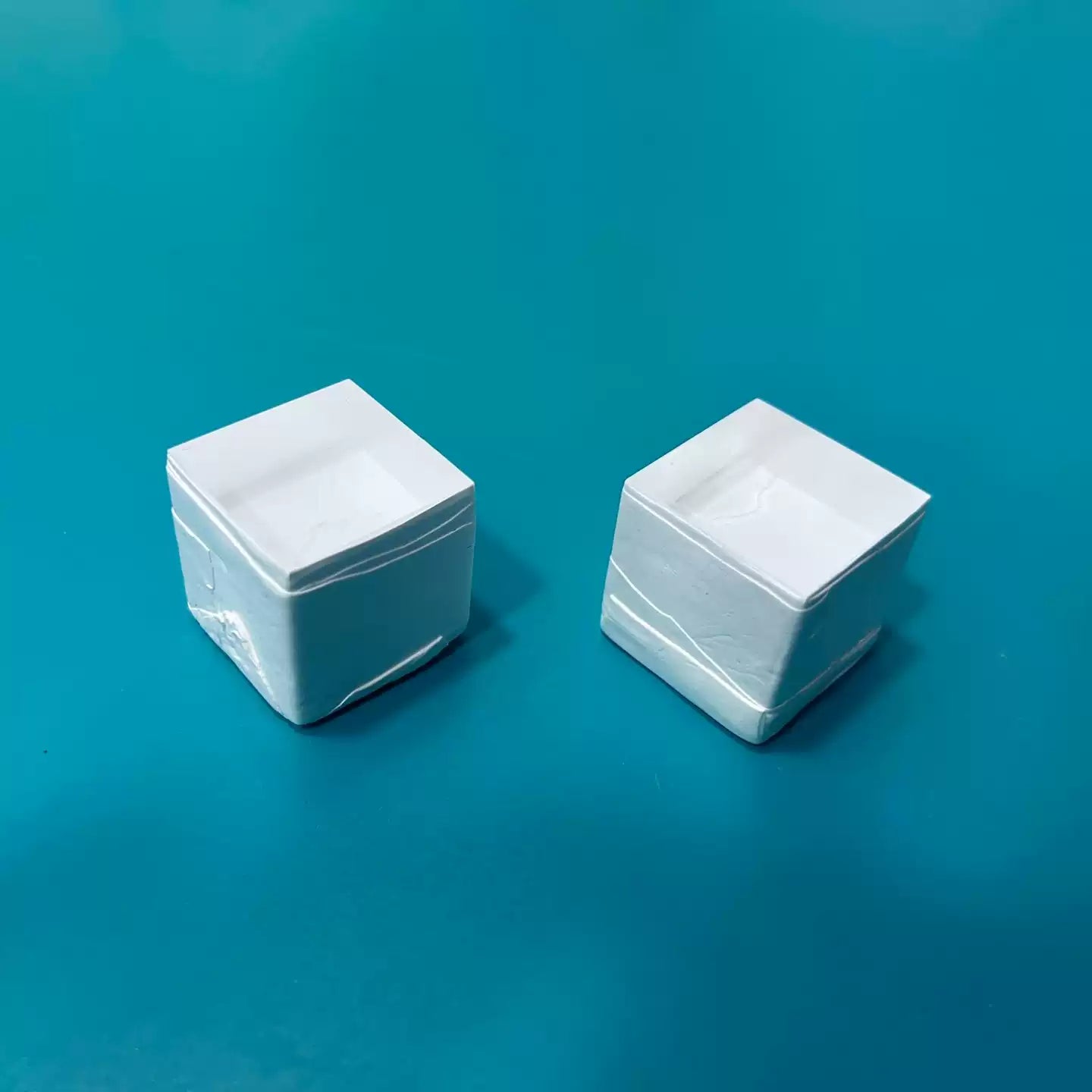
CsI(Tl) crystals are commonly supplied in blocks, plates, pixels, or custom geometries, with optical-grade polishing and optional surface treatments. Due to its slightly hygroscopic nature, CsI(Tl) is typically encapsulated or sealed for long-term stability in practical detector assemblies.
Typical Applications
- Medical X-ray and CT imaging
- Gamma-ray spectroscopy
- Radiation monitoring and dosimetry
- Security and industrial inspection systems
- University and national-lab detector research
Below is a clear comparison of the properties of pure CsI, CsI:Tl, and CsI:Na:
Comparison of CsI, CsI:Tl, and CsI:Na
| Property | CsI:Tl | CsI:Na | Pure CsI |
|---|---|---|---|
| Light Yield (photons/keV) | ~56 | ~40 | <10 |
| Decay Time | ~1 µs | ~630 ns | <10 ns |
| Emission Peak | ~550 nm | ~420 nm | 310 nm (fast), 420–600 nm (slow) |
| Best Detector Compatibility | Photodiodes / CCDs | PMTs | Fast PMTs / UV detectors |
| Efficiency at Room Temperature | Excellent | Good | Low |
| Hygroscopic | Yes | Yes | Yes |
Frequently Asked Questions — CsI(Tl)
What is CsI(Tl)?
What are the main advantages of CsI(Tl)?
What is the emission wavelength of CsI(Tl)?
How does CsI(Tl) compare to pure CsI?
Is CsI(Tl) hygroscopic?
What are typical applications of CsI(Tl)?
Can you provide custom dimensions and polishing?
Share